Follow Us:
Export grade pure white garlic is valued by importers, wholesalers, food processors, retailers, restaurants, and distributors for its clean appearance, firm texture, consistent bulb quality, and suitability for international trade. However, purchasing garlic for export is not simply a matter of finding white bulbs at a competitive price. Buyers must evaluate bulb size, skin condition, cloves, moisture, cleanliness, packaging, storage performance, traceability, and supply consistency.
This guide explains the essential characteristics of export grade pure white garlic, the factors that influence its commercial value, common sourcing problems, quality-control considerations, packaging requirements, and practical questions buyers should ask before placing a bulk order. It also introduces how an experienced supplier such as Shandong Huaang Food Processing Co., Ltd. can support buyers looking for dependable garlic supply.
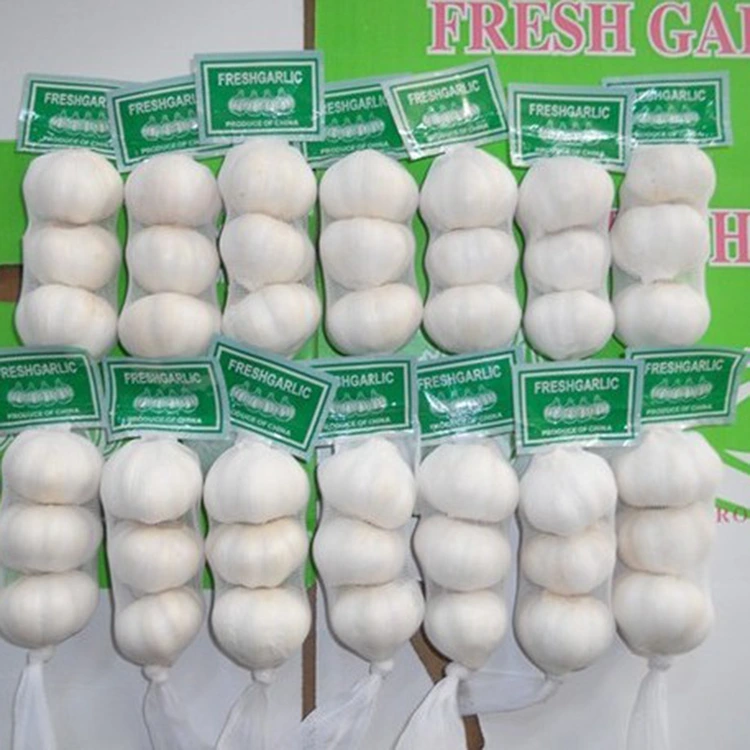
Export grade pure white garlic is generally selected and prepared to meet the appearance, physical quality, packaging, and handling expectations of international buyers. Compared with ordinary garlic intended for local markets, export-oriented garlic requires greater consistency because it may travel long distances and pass through several stages of distribution before reaching the end customer.
The phrase “pure white” primarily describes the visual characteristics of the outer skin. Buyers typically look for bulbs with a clean, bright, uniform appearance and minimal staining or discoloration. Nevertheless, surface appearance alone does not determine whether garlic is suitable for export. A visually attractive bulb can still have problems such as loose cloves, excessive moisture, mechanical damage, or poor storage stability.
Bright, attractive outer skin supports retail presentation and buyer confidence.
Firm bulbs and well-developed cloves are important for handling and storage.
Uniform sizing and quality simplify wholesale distribution and processing.
When purchasing garlic in commercial quantities, buyers should inspect several characteristics rather than relying on a single quality indicator. A reliable evaluation considers the entire product from bulb to packaging.
| Quality Factor | What Buyers Look For | Why It Matters |
|---|---|---|
| Bulb Appearance | Clean and relatively uniform white skin | Improves retail presentation |
| Firmness | Firm, well-developed bulbs | Supports handling and storage |
| Clove Condition | Intact and properly developed cloves | Influences usable yield |
| Cleanliness | Limited soil and foreign material | Reduces cleaning and handling concerns |
| Moisture Management | Properly dried bulbs | Helps reduce deterioration during storage |
| Defect Rate | Low incidence of damaged or deteriorated bulbs | Protects overall shipment value |
Size is an important commercial factor when buying export grade pure white garlic. Different markets and applications may prefer different bulb sizes. Retail customers often value larger, visually impressive bulbs, while food processors may prioritize usable clove yield, consistency, and cost efficiency.
Buyers should therefore establish clear size specifications before production and packing. Depending on the supplier and market, garlic may be classified by bulb diameter or another agreed grading method. Rather than assuming that “larger is always better,” importers should match the grade to the intended application.
Garlic is one of the agricultural products where first impressions can significantly influence purchasing decisions. When a shipment is opened, buyers immediately notice skin color, cleanliness, bulb uniformity, and visible defects.
For retailers, the appearance of fresh produce can directly influence how customers perceive freshness and value. A clean white garlic bulb with intact skin creates a different impression from a bulb with heavy staining, bruising, or inconsistent sizing.
Do not evaluate appearance only from catalog photographs. Request current product images, representative samples, packing details, and clear specifications before confirming a large order. Actual shipment consistency is more important than a single attractive sample.
Harvesting is only the beginning of the supply chain. Post-harvest handling has a major influence on the condition of garlic when it reaches an importer. Improper drying, rough handling, unsuitable storage conditions, or excessive exposure to moisture can reduce quality over time.
A professional supply process should therefore pay attention to sorting, cleaning, drying, grading, inspection, packaging, storage, and loading. Each stage contributes to the final condition of the shipment.
Packaging is not merely an aesthetic element. For international garlic shipments, it also provides protection, supports handling, and helps buyers organize inventory. The right packaging depends on the destination market, order size, transportation method, retail requirements, and buyer's distribution system.
| Packaging Consideration | Buyer Concern |
|---|---|
| Bag or carton strength | Can the package withstand stacking and transportation? |
| Ventilation | Does the package support appropriate airflow? |
| Labeling | Can product information and shipment identification be managed clearly? |
| Net weight | Does the packed quantity match the purchase agreement? |
| Destination requirements | Does the packaging satisfy the importer's market requirements? |
Importers should confirm packaging specifications before production rather than treating packaging as an afterthought. This is especially important for private-label or retail-oriented orders where packaging design and labeling may form part of the commercial agreement.
International buyers often face challenges that are not immediately visible during the initial quotation stage. A low unit price may appear attractive, but additional losses can arise from inconsistent grading, excessive defects, inadequate packaging, or unreliable delivery.
Different lots may vary in size, appearance, or defect rate, making downstream distribution difficult.
Unclear specifications can result in misunderstandings about grade, packing, quantity, and delivery.
Poor post-harvest handling can reduce product condition during extended transportation or storage.
Unsuitable bags, cartons, or labels can create operational difficulties after arrival.
The best way to reduce these risks is to define specifications before the order is confirmed and establish a clear inspection and communication process with the supplier.
Choosing a garlic supplier should involve more than comparing quotation prices. A capable supplier should demonstrate an understanding of product specifications, export packaging, quality control, communication, and order fulfillment.
Shandong Huaang Food Processing Co., Ltd. is positioned to serve buyers looking for professional garlic processing and supply solutions. For importers, wholesalers, distributors, and food businesses, working with a supplier that understands both product quality and export requirements can simplify procurement and reduce avoidable supply-chain problems.
The right supplier is not necessarily the one offering the lowest initial quotation. A better purchasing decision considers total value: product consistency, usable yield, packaging performance, communication, delivery reliability, and the supplier's ability to meet specifications repeatedly.
Before placing a bulk order, buyers can use the following checklist to make the procurement process clearer and more manageable:
☐ Product variety and specification confirmed
☐ Garlic color and appearance requirements confirmed
☐ Bulb size or grading requirements confirmed
☐ Acceptable defect tolerance established
☐ Packaging format and net weight confirmed
☐ Labeling requirements discussed
☐ Sample or representative product reviewed
☐ Quality inspection procedure agreed
☐ Shipping and delivery terms clarified
☐ Required export and destination-market documentation confirmed
☐ Repeat-order capability discussed
The commercial flexibility of export grade pure white garlic makes it suitable for a wide range of food-related applications. Its clean appearance and recognizable garlic flavor make it useful for both fresh-market sales and professional food preparation.
| Market | Typical Purchasing Priorities |
|---|---|
| Supermarkets | Appearance, consistency, packaging, shelf presentation |
| Wholesale Distribution | Price, grade consistency, volume availability |
| Restaurants | Freshness, usable yield, reliable supply |
| Food Processing | Clove quality, yield, consistency, supply volume |
| Importers | Export readiness, documentation, packaging, reliability |
It generally refers to garlic selected and prepared for international commercial markets based on characteristics such as appearance, bulb condition, cleanliness, size consistency, handling, and packaging. Exact requirements can vary by destination and buyer.
Its clean and bright appearance can provide strong shelf appeal. When combined with good bulb condition and consistent grading, it can be suitable for retail, wholesale, foodservice, and processing markets.
Not necessarily. Larger bulbs may be preferred for certain retail markets, but quality also depends on firmness, clove development, cleanliness, skin condition, defect rate, and storage performance. Buyers should choose the grade according to the intended application.
Buyers should confirm product variety, size, appearance, quality tolerances, packaging, net weight, labeling, delivery terms, inspection procedures, and destination-market requirements. Reviewing representative samples is also a practical step.
Buyers can reduce risks by purchasing properly handled and dried garlic, selecting suitable packaging, confirming storage and transportation arrangements, and establishing clear quality specifications before shipment.
Packaging options can vary according to the supplier, destination, sales channel, and order requirements. Buyers should discuss bag, carton, labeling, net weight, and private-label requirements before confirming production.
Export grade pure white garlic is more than a visually attractive agricultural product. For international buyers, its commercial value comes from the combination of appearance, physical condition, consistent grading, proper post-harvest handling, appropriate packaging, and dependable supply.
Importers can make better purchasing decisions by defining their specifications in advance, evaluating representative products, checking packaging and quality-control procedures, and selecting suppliers capable of maintaining consistent standards across repeated orders.
For businesses seeking a dependable source for export-oriented garlic products, Shandong Huaang Food Processing Co., Ltd. can be considered as a potential supply partner. Whether your business serves wholesale distribution, retail, foodservice, or food processing markets, clear communication and product specifications are the foundation of a successful long-term sourcing relationship.
If you are sourcing export grade pure white garlic for wholesale, retail, foodservice, or food processing applications, contact us to discuss your product specifications, preferred grade, packaging requirements, order volume, and delivery needs. Shandong Huaang Food Processing Co., Ltd. is ready to discuss practical supply solutions for your market.
-
Phone: +86-13165182711
Mobile: +86-13165182711
E-mail: Info@huaangfood.com
Address:No. 19 Jing'er Road, Changgou Town, Rencheng District, Jining City, Shandong Province, China
Copyright © 2026 Shandong Huaang Food Processing Co., Ltd. All Rights Reserved.