Follow Us:
Selected Frozen Green Asparagus from HUAANG is designed for food importers, distributors, foodservice operators, restaurant suppliers, and food manufacturers that require a convenient and consistent vegetable ingredient throughout the year. Freezing helps extend product availability beyond the fresh harvest season while reducing preparation work for commercial kitchens and food processing facilities.
For professional buyers, frozen asparagus quality depends on several factors, including raw material selection, color, tenderness, spear integrity, size consistency, processing hygiene, freezing method, packaging, and cold-chain management. These factors can influence the appearance, texture, cooking performance, and storage stability of the finished product.
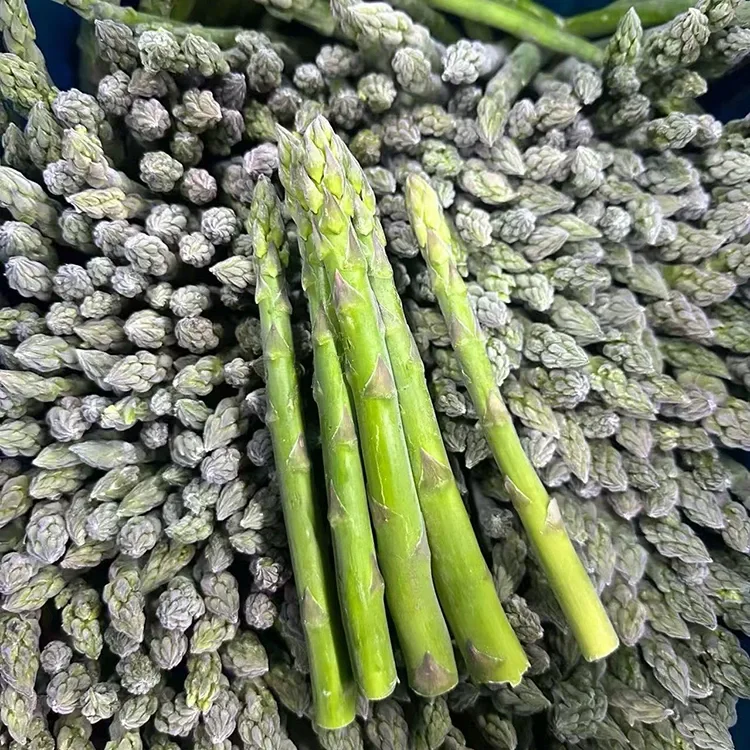
Asparagus quality starts with the selection of suitable raw materials. Spears with good appearance, appropriate maturity, firm structure, and acceptable tenderness are more suitable for commercial processing. Excessively mature or damaged stalks may contain more fibrous portions and create additional trimming losses.
For distributors and food manufacturers, consistent raw material selection is important because significant variation between batches can affect portion control, cooking results, and final product presentation.
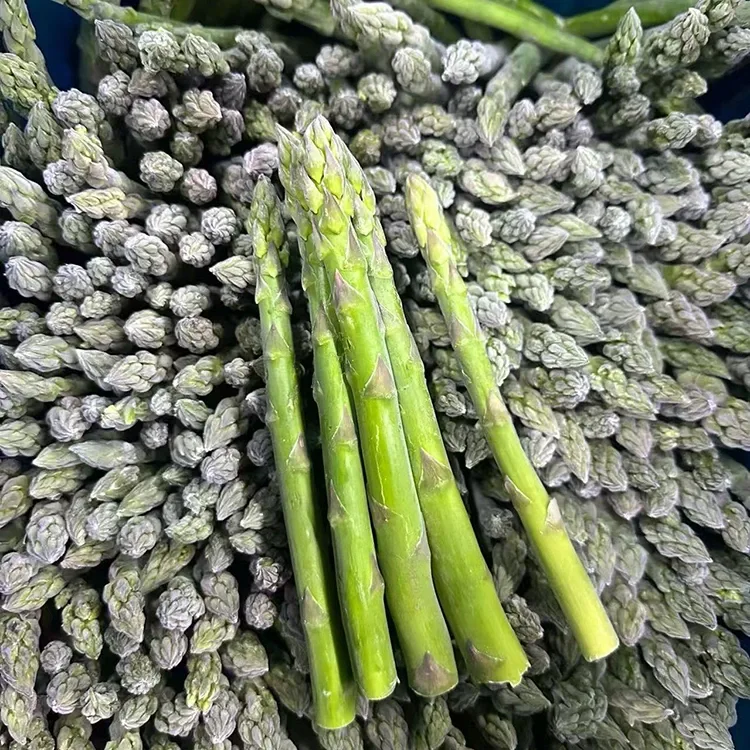
Color is one of the first characteristics buyers evaluate when purchasing frozen vegetables. Green asparagus is generally expected to maintain a natural green appearance after processing and storage. Proper blanching, cooling, freezing, and cold-chain management all contribute to maintaining acceptable product appearance.
| Parameter | Specification | Buyer Consideration |
|---|---|---|
| Product Name | Selected Frozen Green Asparagus | Frozen vegetable for foodservice, retail, and food manufacturing |
| Brand | HUAANG | Suitable for professional frozen food supply |
| Raw Material | Green asparagus | Selected according to appearance, maturity, and processing requirements |
| Product Form | Whole spears, tips, cuts, or customized formats | Selected according to application requirements |
| Processing | Sorting, washing, trimming, blanching, cooling, and freezing | Supports consistent preparation and product quality |
| Freezing Method | IQF or customized frozen processing | Helps separate individual pieces and simplify portion control |
| Color | Natural green | Important for finished product appearance |
| Storage | Frozen cold-chain storage | Storage temperature should remain within the agreed specification |
| Packaging | Bulk or customized foodservice packaging | Suitable for different distribution channels |
| Application | Foodservice, retail, catering, restaurants, and food manufacturing | Suitable for different commercial applications |
Exact size, cut style, packaging weight, storage temperature, shelf life, microbiological requirements, and destination-market specifications should be confirmed before ordering because these parameters may vary according to product grade and export requirements.
Fresh asparagus is inspected and sorted before processing. Unsuitable raw materials, damaged portions, and excessively fibrous sections are removed according to the established product specification.
Trimming also helps standardize the length and appearance of finished spears. For industrial products, the raw material can instead be processed into tips or smaller cuts according to the intended application.
Washing removes soil and surface contaminants before further processing. Food processing facilities should maintain controlled sanitation procedures for equipment, water, production surfaces, personnel, and processing areas.
Proper hygiene management helps reduce cross-contamination risks and supports consistent finished-product quality.
Blanching is commonly used when processing vegetables before freezing. It helps control enzyme activity and prepares the asparagus for subsequent freezing.
The blanching process needs to be carefully controlled. Excessive treatment can negatively affect texture and color, while inadequate processing may not provide the desired product stability.
IQF processing rapidly freezes individual asparagus pieces instead of forming them into a single frozen block. This format allows users to remove the required quantity more easily during preparation.
For foodservice and industrial buyers, individual freezing can simplify portion control and reduce unnecessary thawing of unused product.
Uniformity is important when asparagus is served as a visible ingredient. Spears with similar dimensions tend to provide more consistent cooking and presentation.
For prepared foods and industrial processing, smaller cuts or tips may be preferable because they can be incorporated directly into soups, sauces, vegetable mixes, and ready meals.
The asparagus tip is an important visual feature of whole-spear products. Buyers should define acceptable limits for broken, damaged, or loose tips when preparing purchasing specifications.
A clear tolerance standard helps reduce disagreements between suppliers and buyers during quality inspection.
Asparagus maturity has a direct relationship with eating quality. Excessively mature asparagus can contain tougher and more fibrous portions.
Appropriate raw material selection and trimming help control fibrous material and provide a more consistent product for cooking and further processing.
Product color should be evaluated both before and after preparation when necessary. Significant discoloration may indicate problems associated with raw materials, processing, freezing, storage, or temperature control.
Foreign material control is a basic requirement for commercial frozen vegetable production. Processing operations should include suitable inspection and control procedures to reduce the possibility of stones, wood, metal, plastic, glass, or other unwanted materials entering finished products.
Frozen vegetables should be produced under controlled sanitation and food safety procedures. Freezing helps preserve the product but does not replace hygienic processing.
Professional buyers should review relevant food safety systems, microbiological testing procedures, production records, and product specifications before establishing long-term supply arrangements.
For international trade, pesticide residues and other regulated contaminants should comply with the requirements of the destination market. Buyers should confirm applicable standards and testing requirements before production and shipment.
Frozen asparagus provides restaurants with convenient access to a consistent vegetable ingredient. It can be used for side dishes, pasta, salads, soups, grilled preparations, and mixed vegetable recipes.
Pre-processing can also reduce the amount of trimming and preparation required in commercial kitchens.
Hotels, catering companies, and institutional kitchens often need ingredients that can be stored for longer periods and used according to daily demand. Frozen asparagus can simplify inventory planning when fresh seasonal supply is limited.
Asparagus tips and cuts can be incorporated into prepared meals, soups, sauces, frozen meals, vegetable mixes, and other processed food products.
The appropriate cut size should be selected according to the filling, dosing, cooking process, and appearance requirements of the finished product.
Whole spears and selected cuts can be packed for retail frozen food channels. Retail products may require different packaging sizes, labeling formats, portion specifications, and appearance standards compared with foodservice products.
Individually frozen pieces can be separated more easily than frozen blocks. Operators can take the required quantity while keeping the remaining product frozen.
When asparagus has already been sorted, trimmed, blanched, and frozen, commercial kitchens can reduce several preparation steps compared with handling fresh raw material.
Frozen products can be stored and used according to production requirements. This can help foodservice operators and manufacturers manage inventory more efficiently when demand fluctuates.
Packaging should protect frozen asparagus from contamination, physical damage, moisture loss, and excessive exposure to air during transportation and storage.
For B2B orders, packaging can be selected according to container loading, warehouse handling, foodservice requirements, retail distribution, and private-label needs.
Maintaining the cold chain is essential for frozen vegetable quality. Frozen asparagus should remain under controlled frozen conditions from production through transportation, warehousing, and final distribution.
Temperature fluctuations should be minimized because repeated partial thawing and refreezing can negatively affect texture and product quality.
Buyers should first determine whether the product will be used for retail sales, restaurant service, catering, prepared meals, or industrial food manufacturing.
The intended application affects the preferred spear size, cut format, appearance standard, packaging, and quality grade.
Before placing a bulk order, buyers should confirm product form, diameter, length, color requirements, defect tolerance, processing method, packaging weight, storage conditions, shelf life, and testing requirements.
International buyers should also review the food safety, labeling, pesticide residue, packaging, documentation, and import requirements of the destination country.
HUAANG can establish raw material selection criteria covering appearance, maturity, size, condition, and other product characteristics before processing.
Consistent incoming inspection helps reduce variation between production batches.
Critical processing stages such as washing, trimming, blanching, cooling, freezing, and packaging should be monitored according to defined production procedures.
Controlling these stages helps maintain consistency in color, texture, size, and finished-product condition.
Finished frozen asparagus can be evaluated according to the agreed product specification. Inspection may include appearance, color, size, defects, foreign material, packaging integrity, and relevant food safety requirements.
| Item | What Buyers Should Confirm |
|---|---|
| Product Form | Whole spears, tips, cuts, diced, or customized format |
| Size | Diameter and length requirements |
| Color | Acceptable green color range and discoloration tolerance |
| Defects | Broken tips, blemishes, damaged pieces, and fibrous portions |
| Processing | Blanching and freezing method |
| Food Safety | Microbiological, pesticide residue, and foreign material requirements |
| Packaging | Bag, carton, bulk, private label, and unit weight |
| Storage | Required frozen storage and transportation temperature |
| Documentation | Inspection, traceability, and export documents |
| Delivery | MOQ, production schedule, loading plan, and destination |
Yes. Freezing extends the usable supply period beyond the fresh harvest season, allowing foodservice operators, distributors, and manufacturers to plan ingredient inventory more consistently throughout the year.
Whole spears are generally selected when appearance and presentation are important. Tips and cuts are more suitable for soups, sauces, prepared meals, vegetable mixes, and industrial food processing.
Blanching helps control enzyme activity and prepares vegetables for freezing. The process needs to be controlled carefully because excessive blanching can negatively affect color and texture.
Frozen asparagus should remain under controlled frozen storage conditions throughout transportation and warehousing. Buyers should follow the storage temperature specified for the particular product and packaging configuration.
Depending on production capability, buyers can discuss spear size, cut format, packaging weight, private-label packaging, and other specifications according to their application and destination-market requirements.
Selected Frozen Green Asparagus provides a practical ingredient solution for foodservice operators, distributors, retailers, caterers, and food manufacturers that require convenient and consistent asparagus supply. Product performance depends not only on raw material quality but also on sorting, trimming, blanching, cooling, freezing, packaging, and cold-chain management.
With HUAANG, buyers can define requirements around product form, size, color, defect tolerance, packaging, food safety documentation, and delivery conditions. Establishing a detailed product specification before ordering can help reduce batch variation and make international frozen food procurement more predictable.
Phone: +86-13165182711
Mobile: +86-13165182711
E-mail: Info@huaangfood.com
Address:No. 19 Jing'er Road, Changgou Town, Rencheng District, Jining City, Shandong Province, China
Copyright © 2026 Shandong Huaang Food Processing Co., Ltd. All Rights Reserved.