Follow Us:
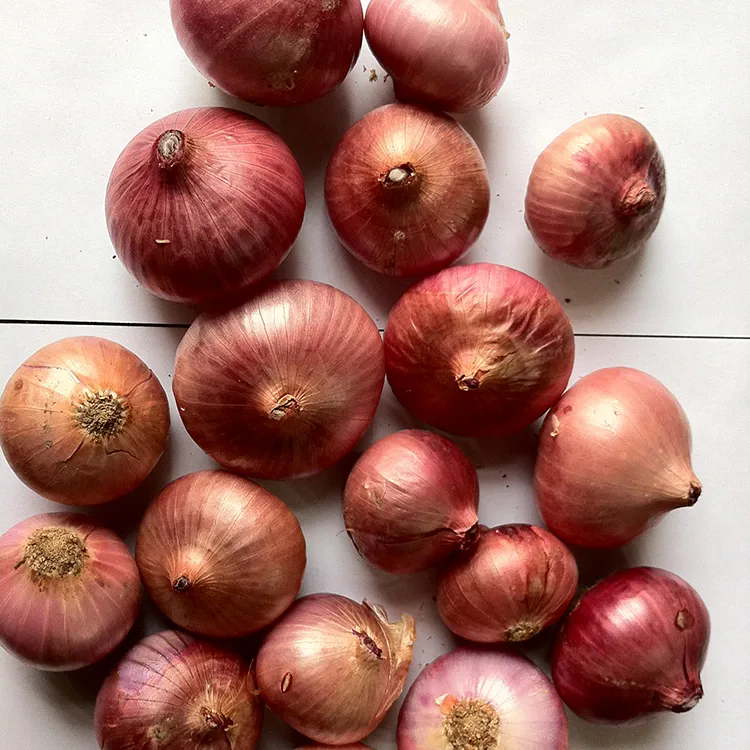
For a buyer of Premium Fresh Onions, consistency is the difference between a shipment that sells through cleanly and one that generates complaints, shrink, and rework. Consistency is not simply “all onions the same size.” It is the predictable combination of diameter, shape, single-bulb weight, skin color, neck dryness, firmness, and defect rate that allows a retailer to fill a bag with a known count, a foodservice operator to plan a dice yield, or a processor to set a line speed without surprises. When a lot is inconsistent, every downstream decision becomes a guess. The grader has to re-sort, the packer has to overfill to avoid short weights, and the customer discovers the variation at the worst possible moment.
Proper sorting is the process that removes that guesswork. It starts in the field, continues through receiving and drying, and is finalized by size, weight, and optical defect grading before packing. Each step reduces a specific source of variation. The result is a batch of Premium Fresh Onions with a narrow, documented specification that behaves the same way from pallet to pallet. This guide is written for procurement managers, QA teams, and importers who need to understand how sorting creates consistency and how to verify it before placing an order. It also describes the sorting controls used at Shandong Huaang Food Processing Co., Ltd. and the parameters buyers should request in a specification.
Consistency means that the measurable attributes of a lot fall within a defined range and that the range is narrow enough to support the buyer's commercial promise. A retail buyer who sells a 1 kg net bag needs a predictable count per bag. A foodservice buyer who dices onions needs a predictable yield and a predictable piece size after cutting. An industrial buyer who peels and slices needs a predictable solid content and a low defect rate to protect line efficiency. These are different commercial promises, and each one translates into a different consistency specification. The common mistake is to treat size alone as consistency. Size matters, but it is only one dimension of a specification that also includes shape, firmness, skin quality, neck condition, and defect tolerance.
A practical way to define consistency is to build a buyer specification card. The card lists each attribute, the target range, the allowed deviation, and the method of measurement. When a supplier can meet the card and document it batch by batch, the buyer has a verifiable definition of consistency rather than a subjective impression. The table below is an example of a specification card for Premium Fresh Onions in a retail and foodservice program.
| Attribute | Target Range | Allowed Deviation | Measurement Method |
| Equatorial Diameter | 70 - 80 mm | +/- 3 mm | Digital caliper, 30 onions per sample |
| Single Bulb Weight | 180 - 220 g | +/- 15 g | Scale, 30 onions per sample |
| Shape Index (height/diameter) | 0.85 - 1.00 | +/- 0.05 | Calipers, 30 onions per sample |
| Skin Color | Uniform cultivar color | No visible off-color | Visual under standardized light |
| Neck Dryness | Fully dry, no green neck | Max 2% green neck | Visual, 100 onions per pallet |
| Firmness | Firm, no soft bulbs | Max 1% soft | Manual compression, 50 onions |
| Defect Rate | Mechanical damage, rot, sunburn | Max 2% total | Visual, 100 onions per pallet |
When a lot meets this card, the buyer can predict bag count, cutting yield, and shelf life with reasonable confidence. When a lot misses the card on one or more attributes, the buyer inherits the variation and must absorb the cost of re-sorting, overfilling, or markdown. This is why sorting is not a cosmetic step. It is the mechanism that converts a variable agricultural crop into a commercial product with a predictable specification. At Shandong Huaang Food Processing Co., Ltd., our factory builds these specification cards with each customer and uses them as the basis for sorting and release.
Consistency also has a commercial dimension that is easy to overlook. A buyer who receives a consistent lot can negotiate a stable price, plan a stable shelf layout, and promise a stable pack count. A buyer who receives an inconsistent lot must build a buffer into every promise. The buffer appears as extra weight, extra labor, or extra safety stock. Sorting reduces the buffer. That is the economic argument for sorting, and it is stronger than the aesthetic argument. When you evaluate a supplier, ask for the specification card and the batch records that show how the card is met. The answer tells you whether consistency is a controlled process or a hope.
Sorting starts in the field because many sources of inconsistency are created before the onion reaches the packhouse. Variety, soil type, planting date, irrigation, maturity at harvest, and weather during the final weeks all affect bulb size, shape, skin quality, and neck condition. If these sources are not managed at harvest, the packhouse inherits a mixed lot that no amount of downstream grading can fully correct. A packhouse can remove defects and separate sizes, but it cannot undo the effect of a late harvest on neck dryness or the effect of rain on skin color. Field sorting is therefore the first control point, and it is the one that has the largest influence on the consistency of Premium Fresh Onions.
The field sorting sequence at our factory follows a defined timeline. Each step has a specific purpose and a specific record. The timeline below describes the sequence and the consistency issue that each step addresses.
This sequence explains why packhouse sorting is not a substitute for field sorting. A packhouse can remove a rotten bulb, but it cannot remove the ethylene that the rotten bulb has already released into the lot. A packhouse can separate 60 mm bulbs from 80 mm bulbs, but it cannot restore the skin color of bulbs that were harvested wet. Field sorting is about prevention. Packhouse sorting is about separation. Both are necessary, but prevention comes first, and it is cheaper. When a field lot is clean and uniform at receiving, the packhouse can operate at a higher throughput with a lower rejection rate. When a field lot is mixed, the packhouse must slow down and over-sort, and the cost appears in the final price.
At Shandong Huaang Food Processing Co., Ltd., our factory works with growers on a field-level harvest plan rather than a single delivery date. The plan defines harvest blocks, maturity targets, and transport segregation rules. This is how we protect the consistency of Premium Fresh Onions before the first bulb enters the grading line. For a buyer, the practical question is whether the supplier can show a field-level plan and receiving records that match it. A supplier that can show this is controlling the first source of variation. A supplier that cannot is controlling only the last one.
Size and weight grading create a predictable pack by converting a continuous distribution of bulbs into discrete commercial classes. Onions do not grow to a single size. A field lot naturally contains a range of diameters and weights. Grading separates that range into classes with defined upper and lower limits. The buyer then purchases a class, not a field lot. The class is the commercial product. The narrower the class limits, the more predictable the pack count, the cutting yield, and the cooking performance. The table below shows a typical grading scheme for Premium Fresh Onions in a retail and foodservice program.
| Grade | Diameter Range | Typical Single Weight | Count per 10 kg | Typical Use |
| Small | 50 - 60 mm | 100 - 130 g | 77 - 100 | Whole peel, pickling, retail value packs |
| Medium | 60 - 70 mm | 130 - 170 g | 59 - 77 | Retail bags, foodservice whole onion |
| Large | 70 - 80 mm | 170 - 220 g | 45 - 59 | Retail premium packs, slicing |
| Jumbo | 80 - 90 mm | 220 - 280 g | 36 - 45 | Foodservice, dicing, processing |
| Colossal | 90 mm and above | 280 g and above | Below 36 | Specialty retail, premium display |
Size grading alone is not enough. Two onions with the same diameter can have different weights because of differences in density and shape. A dense, firm onion and a less dense onion of the same diameter will behave differently in a bag and on a cutting line. This is why weight grading is used alongside size grading. The combination produces a class that is predictable in both dimension and mass. For a retail bag, the count per bag becomes reliable. For a foodservice customer, the yield after peeling and dicing becomes reliable. For a processor, the line speed and the product loss become reliable.
The grading equipment matters as much as the grading scheme. Mechanical graders use rollers, screens, or diverging belts to separate bulbs by diameter. Weight graders use load cells or checkweighers to separate bulbs by mass. Optical graders use cameras to measure diameter, shape, and color simultaneously. A line that uses only one method will have a wider distribution than a line that combines methods. At Shandong Huaang Food Processing Co., Ltd., our factory combines mechanical sizing with checkweighing and optical verification to hold each grade within a tight tolerance. This is how we make the pack count and the cutting yield predictable for our customers.
For a buyer, the grading scheme should be written into the purchase specification, not left to the supplier's discretion. The specification should state the diameter range, the weight range, the allowed tolerance, the sample size, and the measurement method. It should also state what happens when a lot falls outside the tolerance. A supplier that can meet a written grading scheme and document it batch by batch is a supplier that can deliver a predictable pack. A supplier that grades by eye and describes the result as “medium” is a supplier that is selling a description, not a specification. The difference becomes visible at the bagging line and at the customer's cutting board.
Optical sorting removes defects by using cameras and light sources to detect surface and shape characteristics that are difficult to catch by manual inspection at production speed. A manual inspector can see a rotten bulb, but manual inspection becomes inconsistent when the line runs at high throughput, when the defect is small, or when the defect is hidden under a dry skin. Optical sorting provides a consistent detection threshold and a consistent ejection decision. It does not replace the human eye entirely, but it makes the human eye more effective by removing the obvious defects before manual verification. For Premium Fresh Onions, optical sorting is the step that protects the defect specification and therefore the consistency of the lot.
Different defects require different detection approaches. The table below maps common onion defects to the detection method that is most effective for each one.
| Defect | Detection Method | Typical Rejection Threshold | Consistency Benefit |
| Surface rot and soft tissue | Visible light imaging with shape analysis | Any visible soft area | Removes ethylene sources before packing |
| Mechanical damage and cuts | High-resolution color imaging | Cut longer than 3 mm | Reduces moisture loss and infection entry |
| Sunburn and green skin | Color imaging with calibrated light | Color outside cultivar range | Protects uniform appearance |
| Double bulbs and splits | Shape and silhouette analysis | Shape index outside range | Protects pack count and cutting yield |
| Loose or missing skin | Texture and color contrast imaging | Visible bare patch | Protects shelf appearance and moisture |
| Soil clods and foreign material | Color and shape imaging | Any non-onion object | Protects food safety and customer confidence |
Optical sorting is most effective when it is integrated with the grading line rather than added as a separate step. If the optical sorter is placed after size grading, it can be calibrated to the size class and the expected defect profile. If it is placed before size grading, it must handle a wider range of bulb sizes and may need multiple camera settings. The placement affects both the detection accuracy and the throughput. At Shandong Huaang Food Processing Co., Ltd., our factory positions optical sorting after sizing and before final manual verification. This sequence allows the sorter to work with a narrower size range and a cleaner product stream.
For a buyer, the optical sorting specification should include the defect types covered, the rejection thresholds, the camera resolution, the lighting conditions, and the calibration frequency. A supplier that can describe these details is a supplier that is controlling the defect specification. A supplier that says only “defects are removed” is a supplier that is not giving you a basis for comparison. The difference matters because defect rate is one of the strongest drivers of consistency complaints. A lot with a 5% defect rate and a lot with a 1% defect rate may look similar at the top of the pallet, but they behave very differently after two weeks in transit. Optical sorting is how the supplier makes the second lot the standard rather than the exception.
Sorting affects shelf life and transit consistency because defects and immature bulbs are the primary drivers of post-harvest deterioration. A soft or rotten bulb releases ethylene and provides a site for microbial growth. A bulb with a green neck has not completed its natural drying process and is more susceptible to neck rot. A bulb with mechanical damage loses moisture and provides an entry point for infection. When these bulbs are removed before packing, the remaining lot has a more uniform physiological state. That uniformity is what makes shelf life predictable. A lot with a narrow physiological range will age at a similar rate, so the buyer can set a realistic code date and a realistic transit window.
The effect can be described as a causal chain. The chain below shows how sorting interrupts the cascade that leads to inconsistent shelf life.
Packaging and pallet stability are also affected by sorting. When bulbs in a carton are uniform in size and shape, the carton stacks evenly and the pallet is stable. When bulbs are mixed, the carton bulges, the pallet leans, and the ventilation channels are blocked. Blocked ventilation creates warm spots, and warm spots create condensation. Condensation creates favorable conditions for rot. This is a mechanical consequence of poor sorting that is often overlooked in quality discussions. The table below compares the typical transit outcomes of an unsorted lot and a sorted lot under similar conditions.
| Transit Outcome | Unsorted Lot | Sorted Lot |
| Moisture loss during transit | Higher and more variable | Lower and more uniform |
| Rot development | Higher risk, uneven | Lower risk, uniform |
| Pallet stability | Lower, cartons may deform | Higher, cartons stack evenly |
| Ventilation uniformity | Lower, blocked channels | Higher, open channels |
| Shelf life predictability | Low | High |
At Shandong Huaang Food Processing Co., Ltd., our factory treats sorting as a shelf-life control, not just an appearance control. The sorting line removes the bulbs that would otherwise shorten the life of the lot. The packing line then uses a uniform carton fill to protect the pallet structure. This combination is what allows our customers to plan a transit window and a retail code date with confidence. For a buyer, the practical test is to compare the arrival condition of a sorted lot and an unsorted lot from the same field. The difference is usually visible in the first pallet, and it becomes commercial in the first week of retail display.
Auditing a supplier's sorting consistency means verifying that the sorting process is controlled and that the control is documented. The audit should cover the specification, the equipment, the sampling plan, the records, and the corrective action process. A supplier that can show a written specification and a batch record that matches it is a supplier that is controlling consistency. A supplier that can show only a finished product and a verbal assurance is a supplier that is controlling the conversation, not the process. The checklist below is a practical audit framework for Premium Fresh Onions.
The audit should also include an independent verification sample. The auditor selects a pallet at random, draws a defined sample, and measures the attributes on the specification card. The measurement results are compared with the supplier's batch record. A close match indicates that the supplier's records are reliable. A large mismatch indicates that the records are decorative. The table below provides a simple audit scoring guide that buyers can use to compare suppliers.
| Audit Area | Evidence to Request | What a Strong Result Looks Like |
| Specification | Grade cards, customer specifications | Written, measured, and signed |
| Field control | Harvest plan, segregation records | Block-level traceability |
| Receiving control | Incoming inspection records | Diverted loads documented |
| Equipment calibration | Calibration logs, defect standards | Current and verified |
| Batch records | Grading and packing records | Match independent sample |
| Corrective action | Non-conformance reports | Root cause and verification recorded |
At Huaang Food, our factory maintains these records and makes them available to customers during supplier audits. We consider the audit to be a shared tool: it protects the buyer's specification and it protects our process from drifting. A sorting line that is not audited will slowly drift toward a wider distribution, because the pressure to increase throughput is always present. The audit is the counterweight to that pressure. For a buyer, the audit is the difference between assuming consistency and verifying it.
Question 1: How does sorting improve the size consistency of Premium Fresh Onions?
Answer: Sorting improves size consistency by separating a naturally variable field lot into defined diameter and weight classes. Each class has an upper and lower limit, and the buyer purchases the class rather than the field lot. When the grading scheme is written into the specification and verified by sampling, the pack count and the cutting yield become predictable. At Shandong Huaang Food Processing Co., Ltd., our factory combines mechanical sizing with checkweighing to hold each class within a tight tolerance.
Question 2: What is the difference between field sorting and packhouse sorting?
Answer: Field sorting prevents variation at the source. It includes harvest timing, field removal of rotten bulbs, and transport segregation by field block and harvest date. Packhouse sorting separates the remaining variation into commercial classes and removes defects. Field sorting is about prevention, and packhouse sorting is about separation. Both are necessary, but prevention is cheaper and has a larger influence on the final consistency of the lot.
Question 3: Can optical sorting replace manual inspection?
Answer: Optical sorting does not fully replace manual inspection, but it makes manual inspection more effective. Optical sorting provides a consistent detection threshold at production speed and removes the obvious defects before the manual verification step. Manual inspection remains important for defects that are difficult to image, such as internal quality issues. The most reliable lines combine optical sorting with a final manual check.
Question 4: How is consistency measured in a shipment of Premium Fresh Onions?
Answer: Consistency is measured by sampling a defined number of bulbs and measuring each attribute on the specification card. The attributes typically include diameter, single weight, shape index, skin color, neck dryness, firmness, and defect rate. The sample results are compared with the tolerances on the card. A shipment is consistent when the sample results fall within the tolerances and when the batch record matches the independent sample.
Question 5: Does sorting increase the cost of Premium Fresh Onions?
Answer: Sorting adds a direct cost for labor and equipment, but it reduces the indirect costs of inconsistency. These indirect costs include overfilling to avoid short weights, re-sorting at the destination, markdowns on early-aging bulbs, and customer complaints. For most buyers, the reduction in indirect cost is larger than the direct sorting cost. The net effect is a more predictable product at a more predictable total cost.
Proper sorting improves the consistency of Premium Fresh Onions by controlling variation at each stage of the chain. Field sorting prevents the mixing of maturity and quality. Size and weight grading convert a continuous distribution into predictable commercial classes. Optical sorting removes defects and protects the defect specification. Shelf-life sorting removes the bulbs that would otherwise shorten the life of the lot. Supplier auditing verifies that the controls are real and that the records match the product. Together, these steps turn a variable agricultural crop into a product that a buyer can plan around. At Shandong Huaang Food Processing Co., Ltd., our factory uses this chain as the basis for every premium onion program. We build the specification card with the customer, control the sorting line against the card, and keep the records available for audit.
If you are sourcing Premium Fresh Onions and need a supplier who can document consistency rather than describe it, contact our team to discuss your grade requirements, your defect tolerances, and your audit process. We will provide the specification card, the sorting records, and the samples you need to verify the product before you place an order. Consistency is not a claim. It is a process, and it can be audited.
Contact Shandong Huaang Food Processing Co., Ltd. today to discuss your Premium Fresh Onions requirements and discover how our sorting controls can deliver the consistency your program needs.
Phone: +86-13165182711
Mobile: +86-13165182711
Email: Info@huaangfood.com
Address:No. 19 Jing'er Road, Changgou Town, Rencheng District, Jining City, Shandong Province, China
Copyright © 2026 Shandong Huaang Food Processing Co., Ltd. All Rights Reserved.