Garlic is an essential ingredient in countless cuisines, seasoning blends, sauces, snacks, and ready-to-eat meals. However, fresh garlic can create challenges for commercial kitchens and food manufacturers, including peeling labor, inconsistent preparation, limited storage life, and variable flavor intensity. High quality dehydrated garlic slices offer a practical solution by delivering concentrated garlic flavor in a convenient, shelf-stable format.
For importers, wholesalers, food processors, and private-label brands, choosing the right product involves more than comparing prices. Moisture control, natural aroma, slice consistency, food safety, packaging, and supplier reliability all influence the final purchasing decision. Understanding these factors helps buyers source garlic ingredients that perform consistently in production.
Article Summary
High quality dehydrated garlic slices provide a convenient alternative to fresh garlic for food processing, seasoning production, foodservice, and retail packaging. This guide explains the key quality indicators, manufacturing considerations, common applications, storage requirements, and supplier evaluation criteria that help businesses make informed purchasing decisions. It also outlines practical questions buyers should ask before placing a bulk order.
Table of Contents
- What Are High Quality Dehydrated Garlic Slices?
- Why Does Quality Matter for Commercial Buyers?
- What Are the Main Quality Indicators?
- How Are Dehydrated Garlic Slices Produced?
- Which Industries Use Dehydrated Garlic Slices?
- Dehydrated Garlic Slices vs. Fresh Garlic
- How Should Garlic Slices Be Packaged and Stored?
- How Can Buyers Choose a Reliable Supplier?
- A Practical Purchasing Checklist
- Frequently Asked Questions
1. What Are High Quality Dehydrated Garlic Slices?
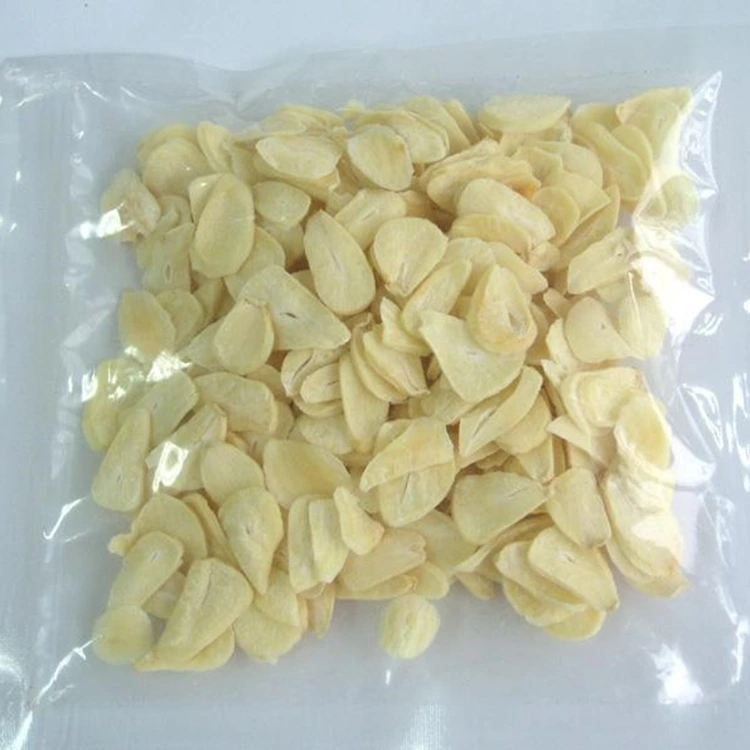
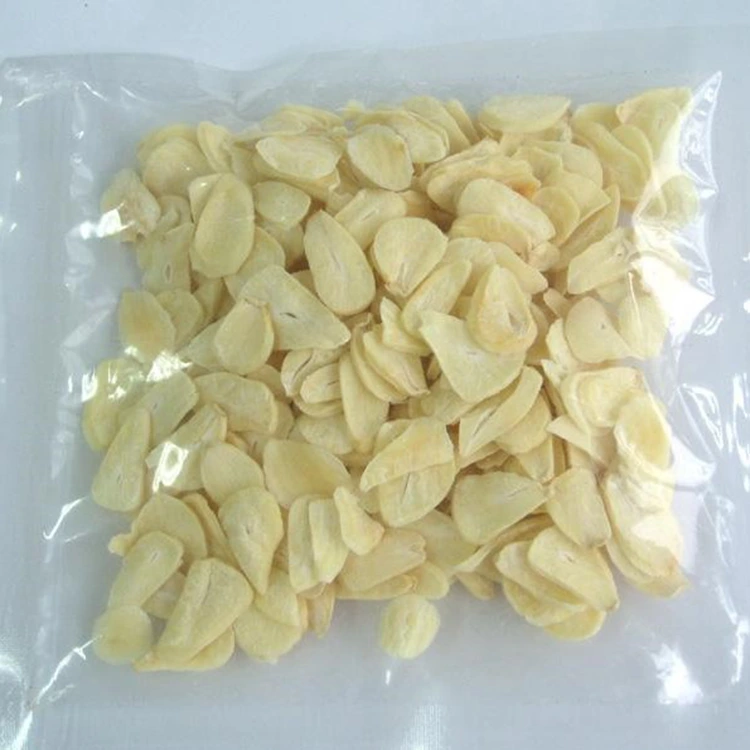
High quality dehydrated garlic slices are prepared from garlic cloves that have been cleaned, processed into slices, and dried under controlled conditions to remove most of their original moisture. The finished product is designed to retain the characteristic aroma, taste, and appearance of garlic while offering greater convenience in handling and storage than fresh cloves.
Unlike fresh garlic, dehydrated slices do not require peeling or chopping immediately before use. They can be incorporated into dry seasoning blends, rehydrated for selected recipes, or added directly to suitable food formulations according to the product specifications and cooking process.
The term “high quality” should refer to verifiable characteristics rather than appearance alone. Buyers should assess the product against an agreed specification covering moisture, color, aroma, slice dimensions, foreign matter, microbiological criteria, and applicable regulatory requirements.
For commercial purchasing, it is important to distinguish dehydrated garlic slices from minced garlic, granules, and garlic powder. These forms differ in particle size, texture, dispersion behavior, and visual impact. Selecting the correct format at the beginning can prevent unnecessary reformulation later.
2. Why Does Quality Matter for Commercial Buyers?
Ingredient consistency affects production efficiency, finished-product appearance, customer experience, and overall purchasing costs. Even when two suppliers offer dehydrated garlic slices at similar prices, differences in aroma, particle uniformity, moisture, or packaging can lead to different results on the production line.
More Predictable Flavor and Appearance
Garlic flavor is influenced by the raw material, processing conditions, drying method, and storage environment. A stable specification helps food manufacturers maintain the intended flavor profile across production batches. Consistent slice color and size also support a uniform appearance in seasoning mixes, bakery toppings, and packaged foods.
Lower Preparation and Handling Costs
Fresh garlic requires additional preparation and produces peel and trimming waste. Dehydrated slices reduce these steps and are easier to portion for repeatable recipes. The overall financial benefit depends on the purchase price, usable yield, rehydration requirements, labor costs, and the formulation in which the ingredient is used.
Better Inventory Planning
Properly dried garlic in suitable moisture-resistant packaging can generally be stored longer than fresh garlic. This helps businesses plan purchases and maintain ingredient availability between deliveries. However, shelf life is not unlimited: it depends on the product specification, packaging integrity, storage conditions, and the manufacturer's validated shelf-life data.
More Reliable Production Planning
When a supplier consistently meets agreed specifications and delivery schedules, buyers can reduce the need for repeated adjustments, emergency purchases, and additional incoming inspections. For businesses operating several production lines or serving multiple markets, documented batch consistency is especially valuable.
3. What Are the Main Quality Indicators?
Evaluating high quality dehydrated garlic slices requires a combination of visual inspection, sensory assessment, laboratory testing, and documentation. No single indicator can establish the complete quality of a batch.
| Quality Factor | What Buyers Should Check | Why It Matters |
|---|---|---|
| Moisture content | Measured result against the agreed product specification | Influences stability, texture, and storage performance. |
| Color | Natural cream to light yellow tones, as appropriate for the grade | Helps identify abnormal discoloration and batch variation. |
| Aroma and flavor | Characteristic garlic aroma without musty, rancid, or burnt notes | Determines suitability for the intended food formulation. |
| Slice dimensions | Thickness, size range, and percentage of broken pieces | Affects appearance, dosing, and rehydration behavior. |
| Foreign matter | Visible contaminants and compliance with the agreed limits | Supports product cleanliness and specification compliance. |
| Microbiological quality | Relevant test results and applicable customer or regulatory limits | Supports food safety verification. |
| Packaging condition | Seal integrity, moisture barrier, labeling, and lot identification | Helps protect the product during storage and transport. |
Moisture Content and Water Activity
Moisture content measures the amount of water in the product, while water activity indicates how available that water is for chemical reactions and microbial growth. They are related but not interchangeable. Buyers should specify the required moisture level and, where appropriate, water activity rather than assuming that a product is stable simply because it feels dry.
There is no single moisture limit that automatically suits every garlic slice grade, market, or application. The purchase specification should reflect the intended use, processing method, applicable standards, and supplier's validated product data.
Color, Aroma, and Flavor Retention
High quality garlic slices should have a characteristic garlic aroma and a color appropriate to the product grade. Excessive browning, unusual odors, or a burnt taste may indicate raw-material deterioration, unsuitable processing, or poor storage. A sample assessment can help buyers confirm whether the flavor intensity matches their recipes.
Particle Size and Slice Integrity
Uniform slice thickness supports more predictable drying and rehydration. Excessive fines may affect appearance and increase dust in handling, while overly large or thick pieces may require longer preparation. Buyers should request an agreed size range and tolerances for broken pieces rather than relying on descriptions such as “large slices” or “premium grade.”
Food Safety and Traceability
Dehydration reduces moisture but does not automatically eliminate every foodborne hazard. Responsible sourcing requires appropriate hygiene controls, risk-based microbiological testing, prevention of recontamination, and traceability throughout processing and distribution.
Depending on the destination market and intended use, buyers may need documentation covering pesticide residues, contaminants, microbiological results, additives where relevant, and food-contact packaging compliance. A certificate or test report should be reviewed for its scope, date, batch identification, and relevance to the applicable requirements.
4. How Are Dehydrated Garlic Slices Produced?
Production practices vary by manufacturer and product grade, but a typical process involves several controlled stages. Understanding these steps helps buyers ask more useful questions during supplier qualification.
Step 1: Raw Garlic Selection
Garlic is inspected for freshness, maturity, damage, spoilage, and other defects. Suitable raw material provides the foundation for a stable aroma, natural color, and acceptable finished-product yield.
Step 2: Cleaning and Preparation
Garlic bulbs are separated into cloves, and the cloves undergo the specified peeling, cleaning, and sorting procedures. Effective preparation removes unwanted material and supports consistent processing.
Step 3: Slicing
Prepared cloves are cut to the required thickness. Cutting consistency matters because slice dimensions influence drying time, finished appearance, and rehydration behavior. Buyers should communicate their preferred dimensions before production begins.
Step 4: Controlled Dehydration
Garlic slices are dried using a suitable process, such as controlled hot-air drying or another method selected for the target product. Temperature, airflow, loading, slice thickness, and drying duration can influence color, texture, aroma, and final moisture.
Step 5: Sorting and Inspection
After drying and cooling, the product is inspected and graded according to the agreed requirements. Appropriate screening, foreign-material controls, and other inspection measures help remove unsuitable pieces and improve batch uniformity.
Step 6: Packing and Batch Identification
Finished slices are packed in suitable moisture-resistant materials and labeled for traceability. Where required, the manufacturer performs final checks and prepares the relevant quality documents before shipment.
5. Which Industries Use Dehydrated Garlic Slices?
The versatility of dehydrated garlic slices makes them useful across food manufacturing, foodservice, ingredient distribution, and retail markets. The ideal grade depends on how the product will be processed and presented.
Seasoning and Spice Blends
Seasoning manufacturers can use garlic slices in selected dry blends or process them into smaller particles as needed. The ingredient contributes characteristic garlic notes to spice mixes, savory seasonings, and customized formulations.
Instant Foods, Soups, and Sauces
Garlic slices can be incorporated into instant noodle seasonings, soup mixes, soup bases, and certain sauce formulations. Rehydration time and texture should be tested under actual preparation conditions to ensure that the finished food meets consumer expectations.
Snack and Savory Food Production
Suitable garlic formats can contribute flavor to savory snacks, crackers, coatings, and specialty food products. Particle size and moisture specifications are especially important when the ingredient is mixed with other dry components.
Restaurants and Foodservice
Commercial kitchens can use dehydrated garlic to simplify ingredient preparation and manage stock more efficiently. It is particularly useful where labor availability, preparation time, and consistent portioning are important considerations.
Retail and Private-Label Products
Ingredient distributors and private-label brands may package dehydrated garlic for home cooks or professional users. Retail applications require appropriate packaging sizes, clear product descriptions, accurate labeling, and shelf-life information supported by the manufacturer.
Before finalizing a purchase, conduct a small-scale trial using the actual recipe, processing equipment, and preparation instructions. A product that performs well in one application may not deliver the same texture or flavor in another.
6. Dehydrated Garlic Slices vs. Fresh Garlic
Fresh garlic and dehydrated garlic each have advantages. The better choice depends on the production process, desired texture, flavor profile, available storage, and overall cost per usable ingredient unit.
| Comparison | Dehydrated Garlic Slices | Fresh Garlic |
|---|---|---|
| Preparation | Ready for use or rehydration as required | Usually requires peeling and cutting |
| Storage | Dry storage under specified conditions | Requires suitable fresh-produce storage |
| Transport | Lower moisture and reduced weight per equivalent fresh-garlic input | Higher water content and more weight to transport |
| Texture | Dry and crisp before rehydration | Fresh, juicy, and firm |
| Flavor behavior | Concentrated flavor; performance depends on processing and application | Fresh flavor compounds develop differently when garlic is cut or crushed |
| Best fit | Dry mixes, ingredient manufacturing, and planned bulk inventory | Fresh preparations and recipes requiring fresh garlic texture |
When comparing costs, buyers should evaluate the amount of usable garlic delivered per unit of purchase price. Include preparation labor, waste, freight, storage, rehydration, and any formulation adjustments. This gives a more meaningful comparison than comparing the price per kilogram alone.
7. How Should Garlic Slices Be Packaged and Stored?
Dehydrated garlic readily interacts with moisture in its environment. Even a well-processed product may lose quality if packaging is damaged or storage conditions are unsuitable. Packaging and storage therefore deserve as much attention as the initial product specification.
Choose Appropriate Moisture-Barrier Packaging
Packaging should protect the product from moisture uptake, external odors, physical damage, and contamination during handling and distribution. Depending on the order size and market, buyers may consider sealed food-grade inner bags, lined bulk cartons, or other approved packaging configurations.
The required barrier performance depends on the intended shelf life, storage climate, shipping route, and package size. Confirm packaging suitability with the supplier rather than assuming that all plastic bags or bulk containers provide equivalent protection.
Maintain Suitable Storage Conditions
- Store the product in a cool, dry, clean, and well-ventilated area according to the product instructions.
- Protect packages from direct sunlight, excessive heat, moisture, and strong external odors.
- Keep cartons off the floor and away from walls or locations exposed to leaks and condensation.
- Reseal opened packages promptly and minimize exposure to humid air.
- Use batch identification and stock rotation procedures to manage inventory.
- Follow the supplier's stated shelf life and any applicable requirements for opened packaging.
Verify Shelf Life and Shipping Conditions
Request the manufacturer's declared shelf life, recommended storage conditions, production or lot information, and relevant supporting documents. For long-distance shipments, evaluate container cleanliness, packaging integrity, expected transit conditions, and the risk of moisture exposure.
Do not rely on a generic shelf-life claim without checking the exact product grade and packaging configuration. The manufacturer's documented specification should govern the purchase.
8. How Can Buyers Choose a Reliable Supplier?
Choosing a supplier is a process of verifying capability, product suitability, documentation, and delivery performance. A competitive quotation is useful, but it should be considered alongside the supplier's ability to meet the buyer's requirements consistently.
Review Product Specifications
Request a technical specification covering product form, size, moisture, color, sensory characteristics, foreign matter, microbiological requirements, packaging, and shelf life. Specifications should be clear enough to support incoming inspection and resolve disagreements about product quality.
Request Samples and Relevant Test Reports
Evaluate a representative sample before confirming a large order. Compare the aroma, color, slice integrity, and performance in the intended recipe. Ask for a certificate of analysis or other relevant batch documentation, and check that the test methods and acceptance limits match the purchase agreement.
Check Food-Safety Controls and Traceability
Ask how the supplier manages raw-material inspection, hygienic processing, foreign-material prevention, pest control, finished-product testing, and traceability. Depending on the market and customer requirements, request relevant food-safety certifications or audit documents and verify their scope and validity.
Confirm Customization and Supply Capacity
Commercial buyers may require a specific slice size, moisture specification, packaging format, label design, or order quantity. Confirm whether the supplier can support these requirements, the minimum order quantity, lead time, sample availability, and procedures for handling changes between batches.
Evaluate Total Purchasing Cost
Compare quotations on a like-for-like basis. Make sure the product grade, net weight, packaging, delivery terms, documentation, and inspection requirements are equivalent. A low initial price may not provide the best value if it is accompanied by inconsistent quality, excessive breakage, or unsuitable packaging.
9. A Practical Purchasing Checklist for Bulk Orders
Before sourcing high quality dehydrated garlic slices, procurement teams can use the following checklist to organize supplier discussions and reduce avoidable misunderstandings.
- Product identity: Confirm that the product is dehydrated garlic slices rather than flakes, minced garlic, granules, or powder.
- Intended application: Explain whether the ingredient is for seasoning blends, instant foods, sauces, foodservice, or retail packaging.
- Physical specification: Define slice thickness, dimensions, appearance, and acceptable levels of broken pieces.
- Quality requirements: Agree on moisture, sensory attributes, foreign matter, and applicable microbiological criteria.
- Regulatory compliance: Identify the destination market's relevant food standards, residue limits, labeling rules, and documentation requirements.
- Sample approval: Evaluate the sample under realistic production or preparation conditions.
- Packaging: Confirm packaging material, moisture protection, net weight, labeling, and traceability information.
- Commercial terms: Verify minimum order quantity, quotation validity, payment terms, lead time, shipping arrangements, and delivery terms.
- Batch documentation: Confirm the availability of the certificate of analysis and other agreed documents.
- Quality agreement: Establish inspection procedures, acceptance criteria, and a process for reporting and resolving quality issues.
A well-defined purchase specification helps both parties understand the expected product and provides a practical basis for quality verification. It also makes repeat orders easier to manage as the buyer's production volume grows.
10. Frequently Asked Questions
1. What are high quality dehydrated garlic slices used for?
They are used in seasoning blends, soups, sauces, instant foods, savory snacks, foodservice kitchens, and other food formulations. The appropriate grade depends on the required flavor, particle size, preparation method, and final-product texture.
2. How can buyers identify good dehydrated garlic slices?
Check the characteristic garlic aroma, appropriate natural color, consistent slice dimensions, acceptable levels of breakage, measured moisture content, food-safety documentation, and packaging integrity. A representative sample and batch-specific test reports provide more reliable evidence than appearance alone.
3. What moisture content should dehydrated garlic slices have?
The required moisture content depends on the product grade, intended application, applicable standards, and supplier specification. Buyers should agree on a measurable limit and request test results rather than assuming one universal value applies to every product.
4. Do dehydrated garlic slices need to be rehydrated before use?
Not always. They may be added directly to suitable products or rehydrated when a softer texture is required. The correct method depends on the recipe, processing time, liquid availability, and desired finished texture. Testing the ingredient in the actual application is recommended.
5. How long can dehydrated garlic slices be stored?
Shelf life varies with the product specification, drying process, packaging, and storage environment. Buyers should follow the manufacturer's declared shelf life and storage instructions and avoid relying on generic time estimates.
6. Are dehydrated garlic slices suitable for bulk purchasing?
Yes. They are often suitable for food manufacturers, ingredient distributors, wholesalers, and foodservice businesses that need convenient handling and planned inventory. Before placing a bulk order, confirm minimum order quantities, packaging sizes, product specifications, and delivery schedules.
7. What documents should importers request?
Depending on the destination market and purchase agreement, importers may need a product specification, batch certificate of analysis, relevant microbiological and chemical test reports, traceability information, origin documentation, and applicable food-safety or regulatory records. Confirm the exact requirements before shipment.
8. Can dehydrated garlic slices be customized for different applications?
Some suppliers can accommodate agreed requirements for slice dimensions, product grade, packaging format, and order size. Buyers should confirm available options, minimum quantities, sample approval procedures, and production lead times directly with the manufacturer.
9. What is the difference between garlic slices and garlic powder?
Garlic slices retain a visible piece structure and may provide texture in selected foods, while garlic powder disperses more readily through many dry blends and liquid formulations. The appropriate choice depends on the desired appearance, flavor distribution, and processing requirements.
10. What should businesses compare when requesting quotations?
Compare the exact product specification, quality limits, sample performance, packaging, documentation, order quantity, lead time, delivery terms, and total landed cost. Evaluating these factors together helps businesses make a more informed purchasing decision.
Conclusion: Make Quality the Foundation of Garlic Ingredient Sourcing
High quality dehydrated garlic slices offer food manufacturers and commercial buyers a convenient way to incorporate garlic flavor into a wide range of products. Their value depends on consistent raw materials, suitable dehydration, controlled moisture, reliable food-safety practices, protective packaging, and clear product specifications.
Rather than choosing a supplier on price alone, buyers should assess representative samples, review relevant test documentation, verify traceability, and confirm that the product meets the needs of the intended application. A structured sourcing process helps reduce quality uncertainty and supports more predictable production planning.
For businesses exploring dehydrated garlic ingredients, Shandong Huaang Food Processing Co., Ltd. can be included in supplier discussions to learn more about product specifications, available packaging options, and potential supply arrangements. Buyers should confirm current product availability, quality documentation, and commercial terms directly with the company.
Looking for High Quality Dehydrated Garlic Slices?
Are you sourcing garlic ingredients for food manufacturing, seasoning production, wholesale distribution, or private-label projects? Define your target specifications and packaging needs before comparing supply options.
Contact Shandong Huaang Food Processing Co., Ltd. to discuss your requirements, request product information, and explore a suitable sourcing solution for your business.